The honest comparison
Partial, full front or full body: how much PPF do you need?
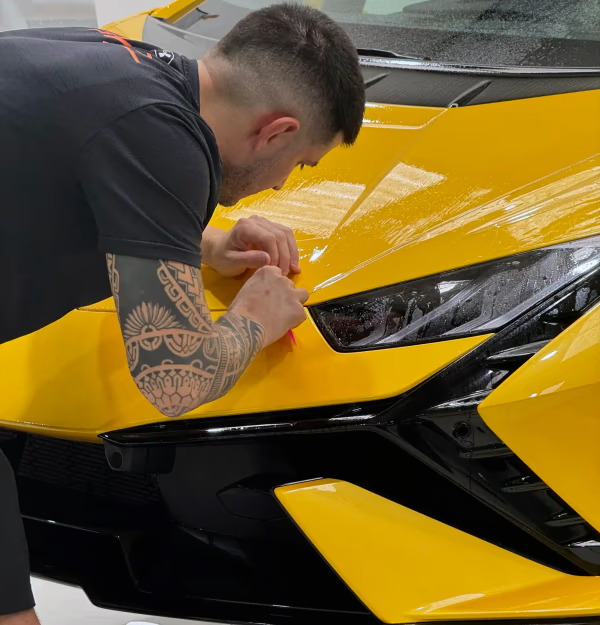
Match the coverage to the risk, not the brochure. A partial front (bonnet leading edge, bumper, mirrors) is the budget answer for city cars that rarely see freeways. A full front - complete bonnet, bumper, guards, mirrors, headlights - is the rational default for anything that drives real roads, because chips don't respect a halfway line across your bonnet. Full body is for keepers, premium paint and gravel-road lives, where every panel carries the same shield. When in doubt: full front, and let the car's life argue you up or down.
| Side by side | Partial / full front | Full body |
|---|---|---|
| What's covered | The impact zone - bonnet, bumper, guards, mirrors | Every painted panel on the car |
| Protects against | Stone chips and road rash where they actually land | All of that, plus door dings' scratches, trolley rash, side gravel |
| The visible line | Partial fronts leave a film edge mid-bonnet; full fronts don't | No lines anywhere - one consistent finish |
| Cost logic | Most protection per dollar | Most protection, full stop - priced accordingly |
| Best for | Daily drivers, city cars, lease terms | Keepers, premium/special paint, 4WDs, exotics |
Front coverage fits when…
- The car lives in the city with occasional freeway runs
- Budget is real and the front takes 80% of the hits
- You'd rather upgrade coverage later than over-buy now
Full body earns it when…
- You're keeping the car - or its paint is special
- Gravel, sites or country roads are part of its life
- You want zero film lines and zero uncovered panels
The partial-front trap: the line across your bonnet
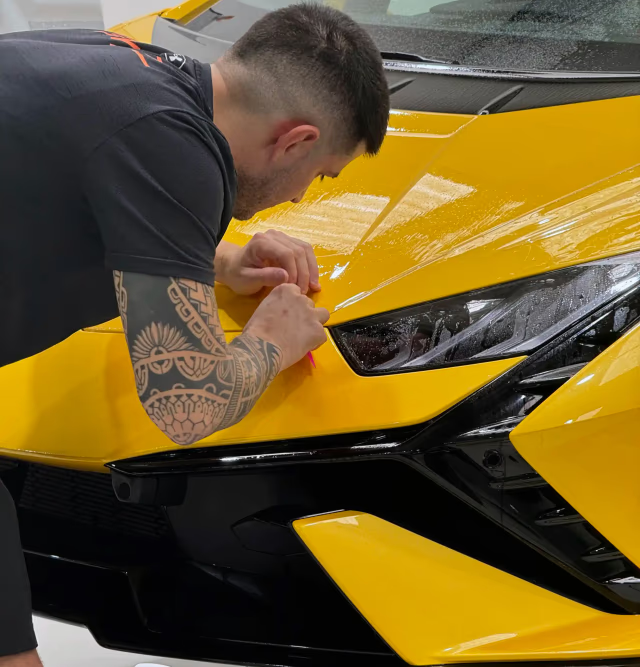
The cheapest PPF packages cover half the bonnet - and draw a film edge straight across it. On light colours you'll never notice; on dark paint, years of washing build a faint tide line at the edge that announces the film to anyone who looks. It's also simply where chips land: the back half of a bonnet still cops stones on the freeway. That's why our default recommendation is a full front - full bonnet, wrapped edges, no line - and why we'll say so even though the partial is easier to sell on price.
How to decide in one conversation
Three questions settle coverage honestly: What roads does the car actually drive - city, freeway, gravel? How long are you keeping it? And how much would a respray on this paint hurt - is it a common colour or a premium one? City + short-term + common colour points to a front package. Freeway-daily + keeper + special paint climbs toward full body. There's no universal answer, which is exactly why package-sheet selling fails and inspections don't.
FAQ
PPF Coverage Options - asked straight.
Is full-front PPF enough? +
For most Perth cars, yes - the front takes the overwhelming majority of impact, and a full front with wrapped edges protects it without lines or compromises. Where 'enough' stops: 4WDs running gravel (add sides and sills), special or soft paint (the whole car is at stake), and keepers whose owners want every panel carrying the same shield. That's the honest escalation path, not a sales ladder.
Can I start with a front package and add more later? +
Yes - film is modular, and adding sills, sides or the rest of the car later is routine. The one thing worth doing right the first time is the front itself: choose a full front over a partial so there's no mid-bonnet line to inherit. Coverage grows cleanly; edges drawn across panels don't.
Why do some shops' 'full front' packages differ? +
Because the term isn't regulated - one shop's full front includes guards, headlights and full mirrors; another's stops at a half bonnet and calls itself generous. Compare package contents, not package names, and ask where every edge will sit. Our coverage tiers list their panels explicitly so the comparison is honest.
Is full-body PPF worth it on a normal car? +
On a car you're keeping and care about - it can be, and it's not just for exotics: plenty of full-body jobs here are family SUVs with premium paint and owners who've done the respray maths. On a short-term lease in white? Probably not, and we'll say so. Worth is about your plans for the car, which is why we ask before we quote.
Get coverage scoped to your car's actual life.
The tiers, the from-prices and the honest recommendation - after we've seen the car, not before.