

The honest comparison
Cast vs calendared vinyl: the difference hiding in your quote.
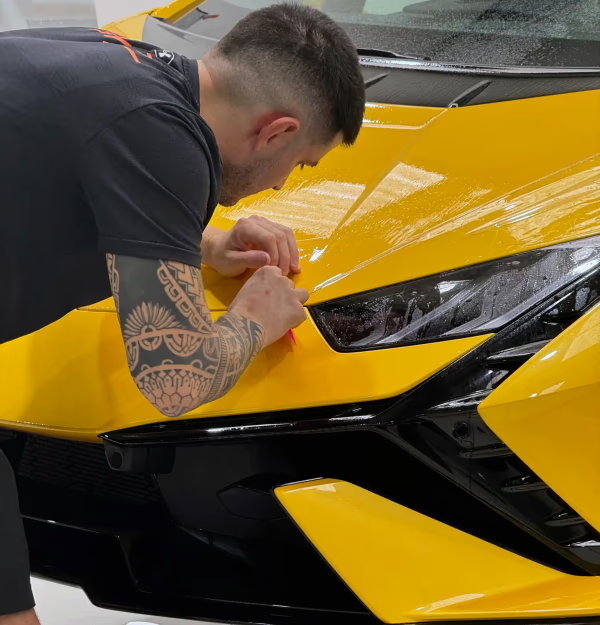
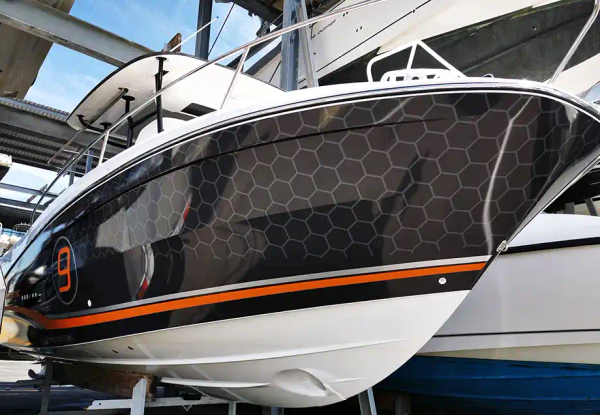
It's how the film is made, and it decides how your wrap ages. Cast vinyl is poured as a liquid and cured flat - no built-in tension, so it conforms to curves and stays put for years. Calendared vinyl is rolled and stretched into shape - cheaper, thicker, but with 'memory': stretch it over a curve and it spends its life trying to shrink back, lifting at edges and recesses. Cast belongs on vehicles. Calendared belongs on flat signage. A cheap wrap quote is very often a calendared quote.
| Side by side | Cast vinyl | Calendared vinyl |
|---|---|---|
| How it's made | Poured liquid, cured without tension | Rolled and stretched into a sheet - retains 'memory' |
| On curves & recesses | Conforms and stays - built for vehicle bodywork | Fights back - shrinks and lifts at stretched areas over time |
| Longevity on a car | Years of stable, conforming performance | Shrinks, lifts edges, prints its failures into the job |
| Cost | The premium film - priced like it | Significantly cheaper per metre - which is the temptation |
| Right application | Full wraps, colour changes, anything with a curve | Flat panels, short-term signage, budget flat-surface jobs |
Cast is the answer when…
- The film goes on a vehicle - curves, recesses, door handles
- The wrap needs to last years, not seasons
- You're paying professional installation prices anyway
Calendared has its place when…
- The surface is genuinely flat - panel vans, trailers, signs
- The application is short-term or promotional
- The budget decision is honest and informed
How to spot a calendared quote on a cast job
The cheapest wrap quote in your inbox usually isn't a cheaper shop - it's a cheaper film. Calendared vinyl can cost a fraction of cast per metre, and on installation day the finished car looks identical. Twelve months later, the calendared job announces itself: edges lifting at recesses, film pulling away around handles and mirrors, corners peeling where the film was stretched hardest.
Defence is one question: which exact film, brand and series? Our quotes name the film so you can look up the spec yourself - and if a job is genuinely flat-surface and short-term, we'll tell you calendared is fine and quote accordingly. The crime isn't calendared film; it's calendared film sold at cast expectations.
FAQ
Cast vs Calendared - asked straight.
Is calendared vinyl always the wrong choice? +
No - on flat surfaces and short-term jobs it's the economically rational choice, and we use it where it belongs: flat van sides, trailers, temporary campaigns. It becomes the wrong choice the moment it's stretched over a curved car panel and sold as a long-term wrap. Material honesty is the whole game.
How much longer does cast vinyl last on a car? +
The gap isn't marginal - cast films are engineered and warranted for multi-year vehicle service, while calendared film on curves starts fighting its own memory from day one. Exact lifespans depend on the film series, the colour and the car's life, so we won't quote brochure numbers - but on curved bodywork the ranking never flips.
Why is my wrap quote so much cheaper than the others? +
Ask which film - brand, series, cast or calendared - and watch what happens. Sometimes the answer is a legitimate efficiency; often it's a calendared film or a thin overlaminate doing the discounting. Any professional shop will name its materials in writing without flinching. Ours are on the quote before you ask.
Does Vinyl Wrapz use cast or calendared? +
Cast for vehicle wraps - always, because nothing else honestly survives curved bodywork. Calendared where it genuinely belongs: flat commercial panels and short-term signage, priced as what it is. The film for your job gets named on your quote either way.
Get a quote that names its film.
Brand, series and finish in writing - compare us properly against any quote in your inbox.