
Above the waterline
Boat Paint Protection Film Perth
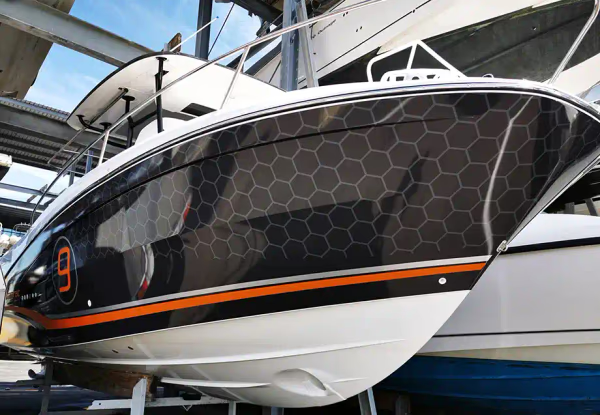
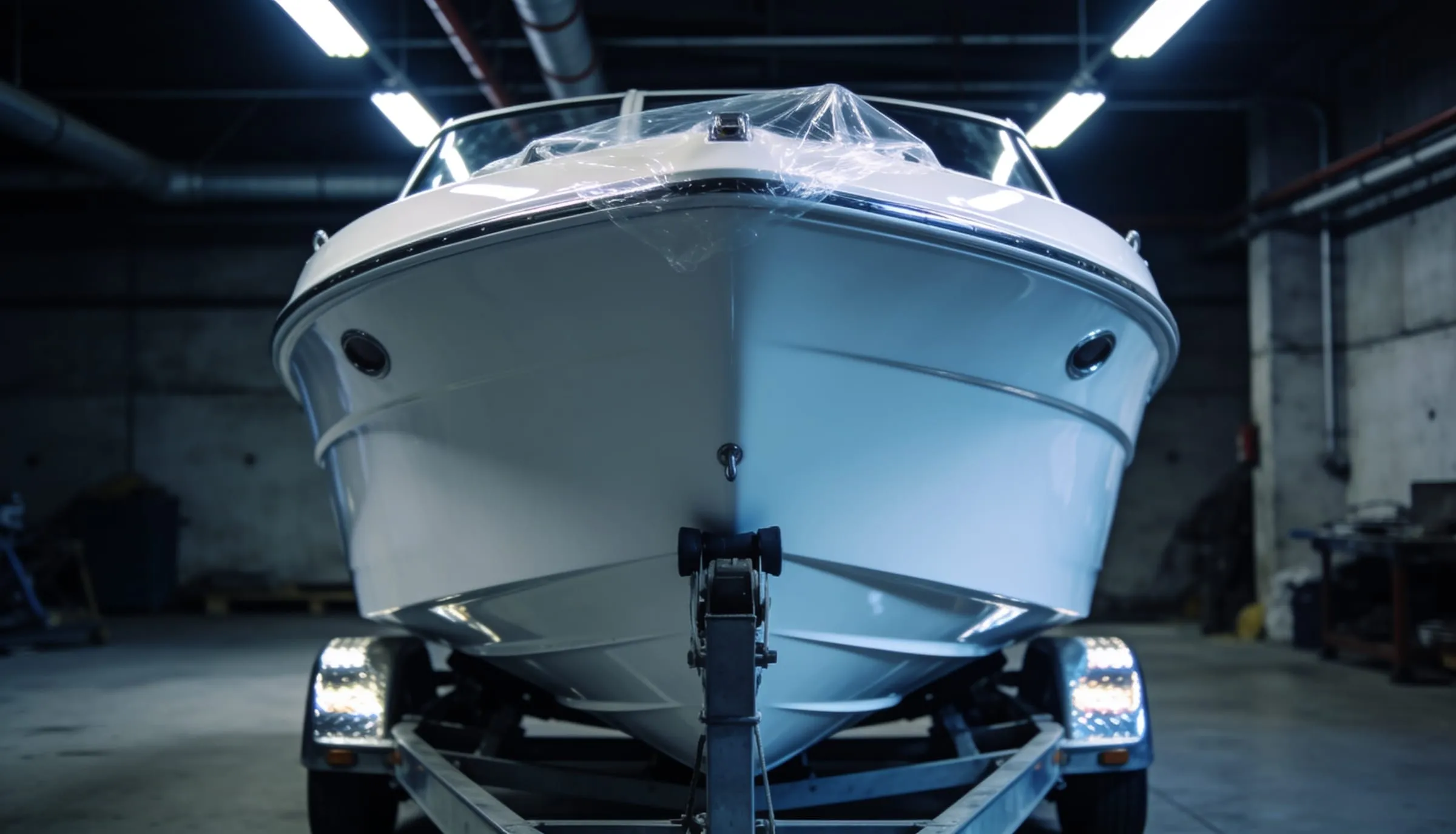
Salt, UV and trailer rash age a hull faster than hours on the water ever will. Clear marine-grade film on the zones that cop it - bow, rub points, transom - applied above the waterline, with the same edge standards as our car work.
- Osborne Park workshop
- Film + ceramic, one roof
- Surface specialists since 2015
The straight answer
Does paint protection film work on boats?
Yes - above the waterline, on the zones that actually take punishment: the bow where fenders and ramps rub, the transom, gunwale edges and trailer contact points. Clear marine film physically absorbs the scuffs and rash that gelcoat otherwise collects, and it takes the UV hit so the finish underneath doesn't chalk. Below the waterline is antifoul territory, not film - and we'll always say so.
What WA boating does to a hull's finish.
The water is the easy part - it's the sun, the salt and the trailer that do the damage.
UV chalking
WA sun oxidises gelcoat into that chalky, flat finish every second-hand hull wears. It starts the first summer the boat lives outside.
Rub points & fender rash
Pens, ramps, rafting up - the same spots get rubbed every single trip, and gelcoat keeps the score.
Trailer rash
Rollers, skids and tie-downs wear their signature into the hull along the same lines, every launch and retrieve.
Salt that never clocks off
Salt spray left to bake is the fastest ager of any marine finish - and no one rinses perfectly, every time.
The right tool per panel
Film on the wear zones. Options for the rest.
Marine protection is honest zoning: film where the hull gets touched, and the right product everywhere else.
Clear film on the strike zones
Bow, transom corners, gunwale edges and trailer lines - the film takes the rash, the gelcoat stays factory.
About paint protection filmWraps for the whole look
Colour change, naming and printed hull graphics live on our boat wraps page - film and wrap combine happily.
Boat wraps in PerthAbove the waterline, always
Film has no business below the waterline - that's antifoul's job. Conditional, honest scope is part of the quote.
Pricing
What hull protection costs.
Hull length, freeboard height and access decide the hours - the tier below is the honest starting point for trailer boats.
Clear hull protection
Most popularfrom $2,490
- Bow, rub zones & transom
- Marine-grade clear film
- Above-waterline scope
Hull colour change
from $5,990
- Full above-waterline recolour
- No repaint, reversible
- Protection while it's on
Guide figures for budgeting only - every job is quoted itemised and in writing after we've seen the vehicle or photos, and your quote confirms GST treatment.
Reviews
What customers say about this work.
★★★★★
“Good old fashioned customer service with faultless perfection in what they do! Very happy customer!”
★★★★★
“Great work and great timing! Really happy with the details ☺️”
★★★★★
“Couldn't be happier with the team at Vinyl Wrapz. From start to finish, the experience was seamless and professional. We had two vehicles wrapped and the quality of workmanship is outstanding.”
FAQ
Boats & Marine - asked straight.
Can film go below the waterline? +
No - and be wary of anyone who says yes. Below the waterline belongs to antifoul systems designed for constant immersion; film is engineered for weather, not permanent submersion, and no film manufacturer warrants it underwater. Our scope is always above-waterline: bow, topsides, transom and the zones that take contact. It's a smaller job than some shops will sell you, because it's the honest one.
Which parts of a hull earn film? +
The places that get touched: the bow where fenders and ramp approaches rub, gunwale and transom corners, trailer roller and skid lines, and the transom itself if you board over it. UV-facing topsides can justify film on a dark or premium hull. We'll walk the boat with you and film the zones your boating actually wears - not the whole hull for the sake of the invoice.
Film or ceramic on gelcoat? +
Different jobs, same as on a car. Film physically absorbs rubbing and impact - nothing else stops trailer rash. Coatings add slickness and UV resistance and make salt rinse off more completely, but they can't absorb a fender's worth of friction. Wear zones want film; broad topsides that never get touched are where a coating makes more sense per dollar.
How does film handle salt water? +
Well - marine film is engineered for exactly this life, and salt itself doesn't attack the adhesive or the film. The habit that matters doesn't change: rinse the boat fresh after salt runs, because baked salt ages every surface, filmed or not. The difference is what the rinse achieves - on film, everything lets go; on tired gelcoat, the salt's already won.
Can you film over existing hull graphics or a wrapped hull? +
Yes, in the right order - clear film can go over sound graphics and wrap to armour them at rub points, and it's a common combination with our boat wraps. What we won't film over is failing material: lifting decal edges or oxidised gelcoat get sorted first, because film locks in whatever sits beneath it. The inspection sets the order of operations.
Does the boat need to come off the water? +
Yes - hull film is workshop work on a dry, decontaminated surface. Trailer boats come to Osborne Park as they are; for larger vessels, talk to us about logistics before you arrange anything. Surface prep is most of the job: salt, wax and oxidation all have to be genuinely gone before film touches gelcoat.
How long does hull film last in WA conditions? +
It depends on the film zone and the boat's life - a bow that kisses a pen every weekend works harder than topsides that only fight the sun - so we won't hand you a brochure number. What we'll do instead is give you a straight expectation per zone when we quote, and stand behind the workmanship. When a wear-zone panel eventually earns its keep, that panel gets replaced; the gelcoat under it stays factory.
Is this the same as the boat wrap service? +
Related, but different jobs: this page is clear protective film - invisible armour on wear zones. Boat wraps are the visual side: colour changes, naming and printed hull graphics. They combine well (wrap for the look, clear film over its rub points), they're quoted together happily, and they happen in the same bays. If you're not sure which you're after, that's a two-minute conversation.
Protection by vehicle type
Visit us
Visit the Vinyl Wrapz workshop in Osborne Park.
- Vinyl Wrapz18 Rowallan Street, Osborne Park WA 6017
- (08) 9443 8808
- Mon-Fri, 8am-4pm
- Call when you arrive and we'll guide you in.
Interactive map loading shortly