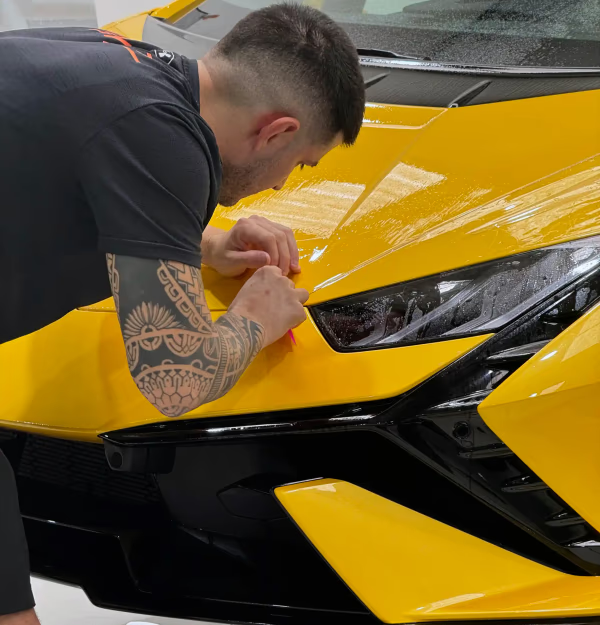
Heat, glare & privacy
Window Tinting Perth
Perth summers are brutal on cabins. The right film cuts the heat you feel, the glare in your eyes and over 99% of the UV - fitted by a shop that works with film all day, every day.
- Osborne Park workshop
- Controlled indoor bays
- Film specialists since 2015
The Perth problem
Clear glass is no match for a Perth summer.
Heat, glare, fade and eyes on your gear - the sun collects on all four fronts, every day the car is outside.
Cabin heat
A Perth car park in January turns untinted glass into an oven door - and the air-con pays for it all the way home.
Glare
Low winter sun and white summer light both end up in your eyes. Film takes the edge off without darkening your view of the road.
Interior fade
Sun through clear glass slowly cooks dashboards, trim and upholstery. The fade is permanent - the fix is stopping it early.
Privacy
Gear on the back seat, kids in the car, a ute parked on site all day - darker rear glass keeps eyes out.
What film changes
One layer of film, four everyday wins.
Heat you can measure
Ceramic films are built to reject infrared - the part of sunlight you feel as heat on your skin. The cabin settles faster and the air-con stops fighting the glass.
99% of UV, gone
Quality automotive films are manufacturer-rated to block more than 99% of UV - the rays that age interiors and skin alike. Your right arm will thank you on the long commutes.
Less glare, sharper eyes
Film knocks the harshness out of low winter sun and oncoming headlights - the difference you notice on the first drive home.
Holds the glass
If a window breaks, film helps hold the fragments together instead of showering the cabin - a quiet safety layer you hopefully never test.
Film tiers
Not all tint is equal. Here's the ladder.
Every film darkens glass. What you're actually paying for is what it does to heat, how it behaves over the years, and whether it plays nicely with your electronics. We fit films from the manufacturers who set the standard: SunTek, LLumar and Avery Dennison among them.
Dyed
EntryColour in the film absorbs light - the classic tint look for privacy and glare on a budget. Modern colour-stable dyes have fixed the purple-fade of the old days, but heat rejection is modest.
Pick it if: Looks and privacy matter more than heat.
Carbon
Step upCarbon particles block more solar energy than dye alone and hold their colour for the long haul. Metal-free, so GPS, radio and phone signals sail straight through.
Pick it if: You want real heat relief without ceramic money.
Ceramic
The sweet spotNano-ceramic particles - invisible to the eye - target infrared specifically. Serious heat rejection even in lighter, legal shades, with no signal interference and no fade.
Pick it if: You park outside and feel Perth summer daily.
Ceramic IR+
FlagshipThe top ceramic lines, the class of LLumar's IRX, SunTek's Evolve and Avery Dennison's Nano Ceramic IR, are rated by their makers at up to 97% infrared rejection. The most comfortable a car cabin gets behind glass.
Pick it if: You want the best glass performance money buys.
The exact product line behind each tier is confirmed in your written quote - with the manufacturer's spec sheet and film warranty alongside it.
How to read a tint quote.
Three numbers do all the talking on a film spec sheet - compare any quote with these and you can't be baffled.
VLT
Visible light transmission - how much light passes through. 35% VLT means 35% of light gets in. Lower number, darker glass.
IR rejection
How much infrared - the heat you feel - the film blocks. This is the number that changes how the car feels at the lights in January.
TSER
Total solar energy rejected - the whole package of heat, light and UV combined. The most honest single number for comparing films.
Shades
Pick your shade on your glass, not a brochure.
Darkness is a choice - we put real samples against your windows in workshop light, with straight advice on the legal limit for each one.
Light
Barely-there tint that keeps the factory look while still cutting heat and UV - ceramic film does its best work here.
Factory match
Blend the front glass to match factory-tinted rear windows - the most popular choice, and fully legal done right.
Privacy dark
As dark as the law allows where the law allows it - we'll show you the limit for each window before you choose.
The rules
What's legal in WA - the short version.
Windscreen: No film on the swept area - a visor strip across the top of the glass only.
Front side windows: At least 35% VLT - the glass must let 35% of light through.
Behind the driver: Rear sides and rear screen can go darker - down to 20% VLT.
Reflectance: No mirror finishes - reflectance is capped at 10%.
Police check tint with calibrated light meters, and an illegal shade is a defect notice waiting to happen. Every shade we fit is road-legal - rules current as at July 2026, checked against your car at quote time.
One myth worth killing: factory 'privacy glass' is dark, but it's just dyed glass - it blocks eyes, not heat. Ceramic film over factory privacy glass is how you get the dark look and a cool cabin.
Why a wrap shop
Tint is film. Film is the whole trade here.
Film is our whole trade
This shop wraps, protects and tints - precision film handling isn't a sideline here, it's the entire business. see the full-stack story →
Cut to the glass, not near it
Patterns cut precisely and edges finished properly - no gaps, no lifted corners, no bubbles worked out in your driveway.
Dust-managed bays
Tint hates dust. Your car is tinted indoors in the same controlled bays we use for paint protection film. about our PPF →
How it works
Booked, shaded, fitted, done.
Most cars are in and out the same day - here's the path.
- 01
Quote
Tell us the car and what you're after - we'll quote the film tiers and shade options straight, with the spec sheets to back them.
- 02
Pick your shade
Real samples against your glass in workshop light, with the legal limit for each window laid out before you decide.
- 03
Prep
Glass cleaned and decontaminated; old film and adhesive stripped properly if there is any.
- 04
Fit
Film cut to your glass and fitted in a controlled indoor bay - edges to the seal, not near it.
- 05
Handover
A walk-around, plus care notes for the curing period - including when it's safe to wind the windows down.
Pricing
What window tinting costs.
Starting points by coverage - the film tier you choose moves the number, and the quote names the film.
Front two windows
from $180
- Match factory-tinted rear glass
- Road-legal shades
- Fitted in indoor bays
Full sedan / hatch
Most popularfrom $390
- All side windows + rear screen
- Carbon or ceramic film tiers
- Lifetime film warranty options
Full SUV / 4WD
from $450
- Larger glass, steeper screens
- Carbon or ceramic film tiers
- Quoted to the exact glass
Guide figures for budgeting only - every job is quoted itemised and in writing after we've seen the vehicle or photos, and your quote confirms GST treatment.
Reviews
What customers say about this work.
★★★★★
“Good old fashioned customer service with faultless perfection in what they do! Very happy customer!”
★★★★★
“From start to finish, the service was professional, friendly and genuinely focused on delivering a quality result.”
★★★★★
“Great work and great timing! Really happy with the details ☺️”
FAQ
What Perth drivers ask about window tinting.
What's the darkest legal tint in WA? +
Front side windows must let at least 35% of light through, and everything behind the driver can go down to 20% VLT. The windscreen itself can't be tinted - only a visor strip across the top. We fit road-legal shades only and show you the limit for each window before you choose.
Is ceramic tint worth the extra cost? +
If heat is why you're tinting, yes. Dyed film darkens glass; ceramic film targets infrared - the heat you actually feel - and does it even in lighter legal shades. Park outside all day or do long commutes and the difference is obvious. If it's purely looks and privacy, a quality carbon film is honest value.
Does tint actually help with heat? +
Quality film cuts the solar energy coming through the glass, and ceramic construction is built specifically to reject infrared heat. How much depends on the film tier and shade - we'll show you the manufacturer's numbers side by side rather than promising one figure for everything.
How long does window tinting take? +
Most cars are done the same day - often within a few hours. We'll confirm timing when you book.
How long before I can wind the windows down? +
The film needs a few days to cure to the glass - usually two to three, longer in cold weather. Wind a window down early and the edge can lift. We'll give you the exact window for your film at handover.
Can you remove old or bubbling tint? +
Yes. We strip the old film and adhesive properly before fitting new tint, and check the glass and demister condition while it's bare.
Will tint affect my demister, GPS or radio? +
Not with the films we fit. Carbon and ceramic films are metal-free, so there's nothing in the layer to interfere with radio, GPS or phone reception - and the film is fitted to work with demister lines, not against them.
Visit us
Visit the Vinyl Wrapz workshop in Osborne Park.
- Vinyl Wrapz18 Rowallan Street, Osborne Park WA 6017
- (08) 9443 8808
- Mon-Fri, 8am-4pm
- Call when you arrive and we'll guide you in.
Interactive map loading shortly