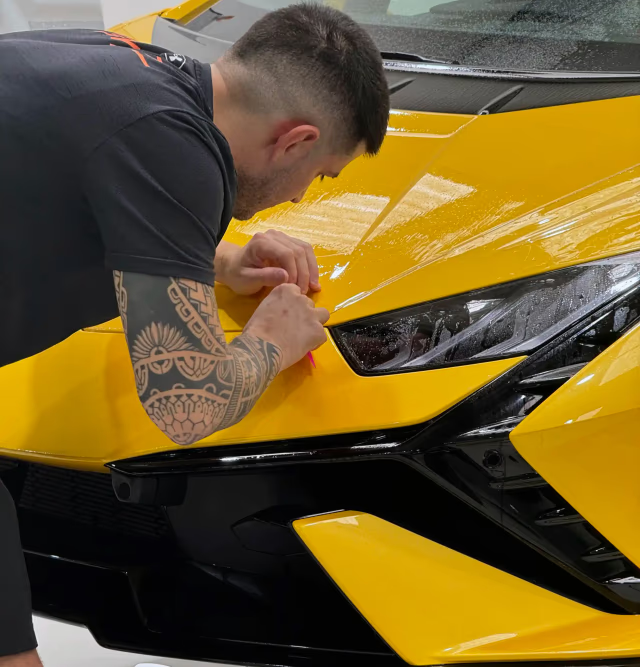
Vinyl wrap cost - Perth pricing guide
Vehicle Wrap Price Guide - vinyl wrap cost explained in Perth
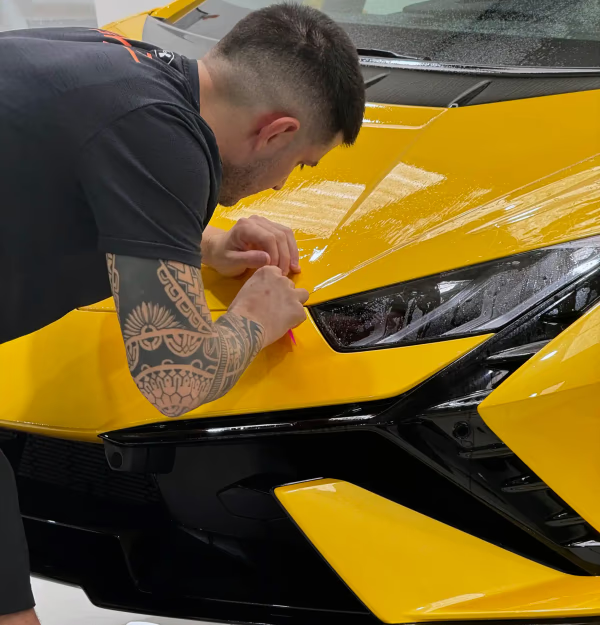
How much does a vinyl wrap cost in Perth? The honest answer: it depends on the vehicle, film, finish, coverage, preparation and installation complexity. This guide explains the whole vinyl wrap price picture - what moves the cost, what's included, and what real Perth jobs cost - so you can read any wrap quote with confidence.
See the guide pricesVinyl wrap prices at a glance.
Guide prices at a glance - the service guides further down explain how each one is built.
Colour change wraps
Closed-door transformations in gloss, satin, matte and specialty films.
from $4,990
- Closed-door colour change from $4,990
- Door jambs from $1,490
Paint protection film
Self-healing protection, cut to your exact model.
from $2,990
- Full front end from $2,990
- Front + sides from $4,490
- Full vehicle from $7,990
Commercial & fleet
Design, print, laminate and install under one roof.
from $1,990
- Partial wrap / signage from $1,990
- Full commercial wrap from $4,990
Boat wraps
Above the waterline - printed, colour change or protected.
from $3,990
- Printed boat wrap from $3,990
- Boat colour change from $5,990
- Boat PPF from $2,490
Removal & preparation Old wraps, glue residue and surface prep - often inspected before quoting.
from $550These are guide prices only. Final quotes depend on vehicle condition, film choice, coverage, preparation and installation complexity. GST treatment is confirmed on your written quote.
What real Perth wrap jobs cost.
Real jobs from the Osborne Park floor - and the pricing logic behind each one.
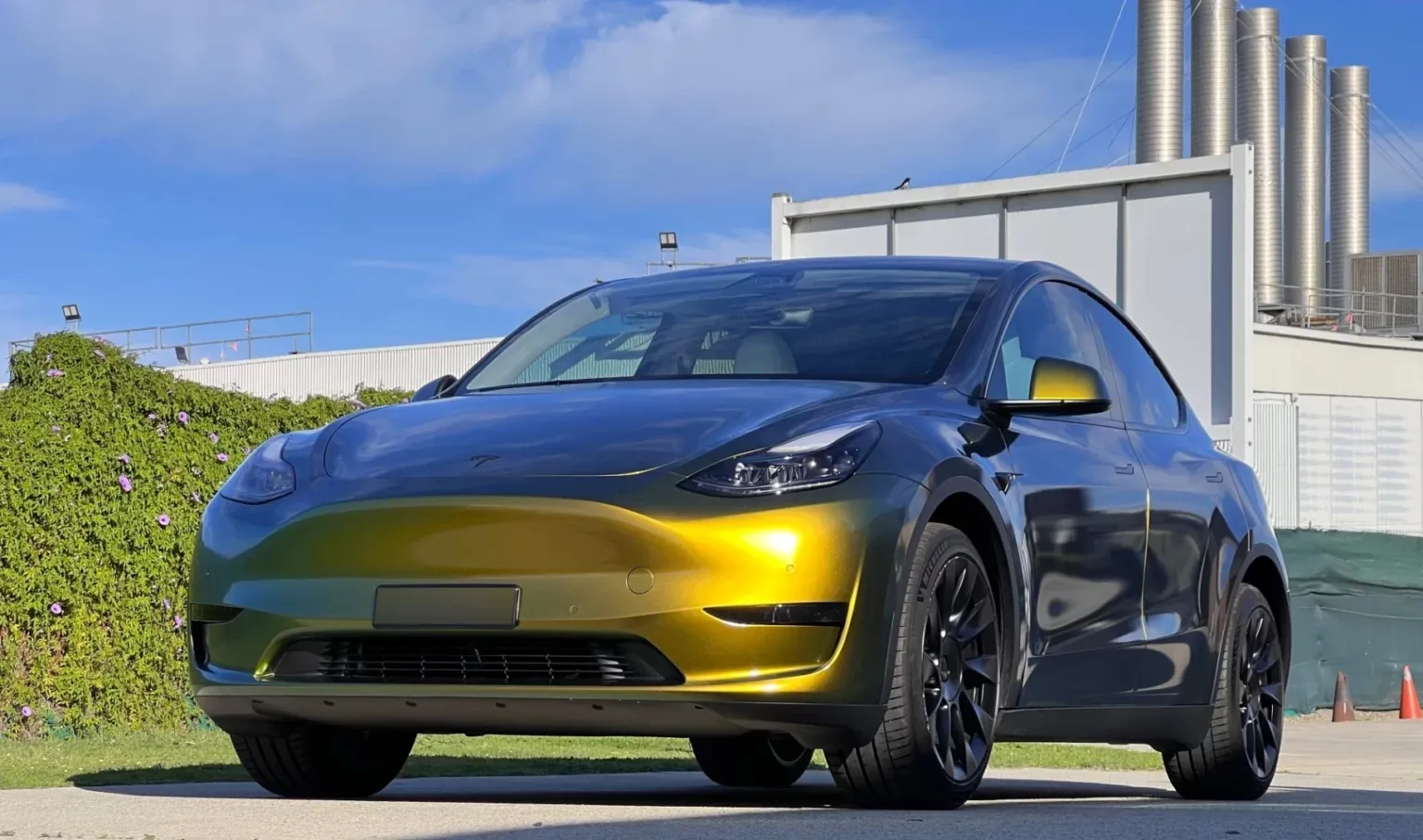
Tesla Model Y - satin colour change
A full closed-door colour change on a daily-driven Model Y - decontamination, panel-by-panel prep, then satin film worked around the door handles, cameras and glass edges. The owner's words on Google: 'sharp, premium, and exactly what I wanted.'
For a job like this
$5,000-$7,000
depending on film, condition and whether jambs are included.
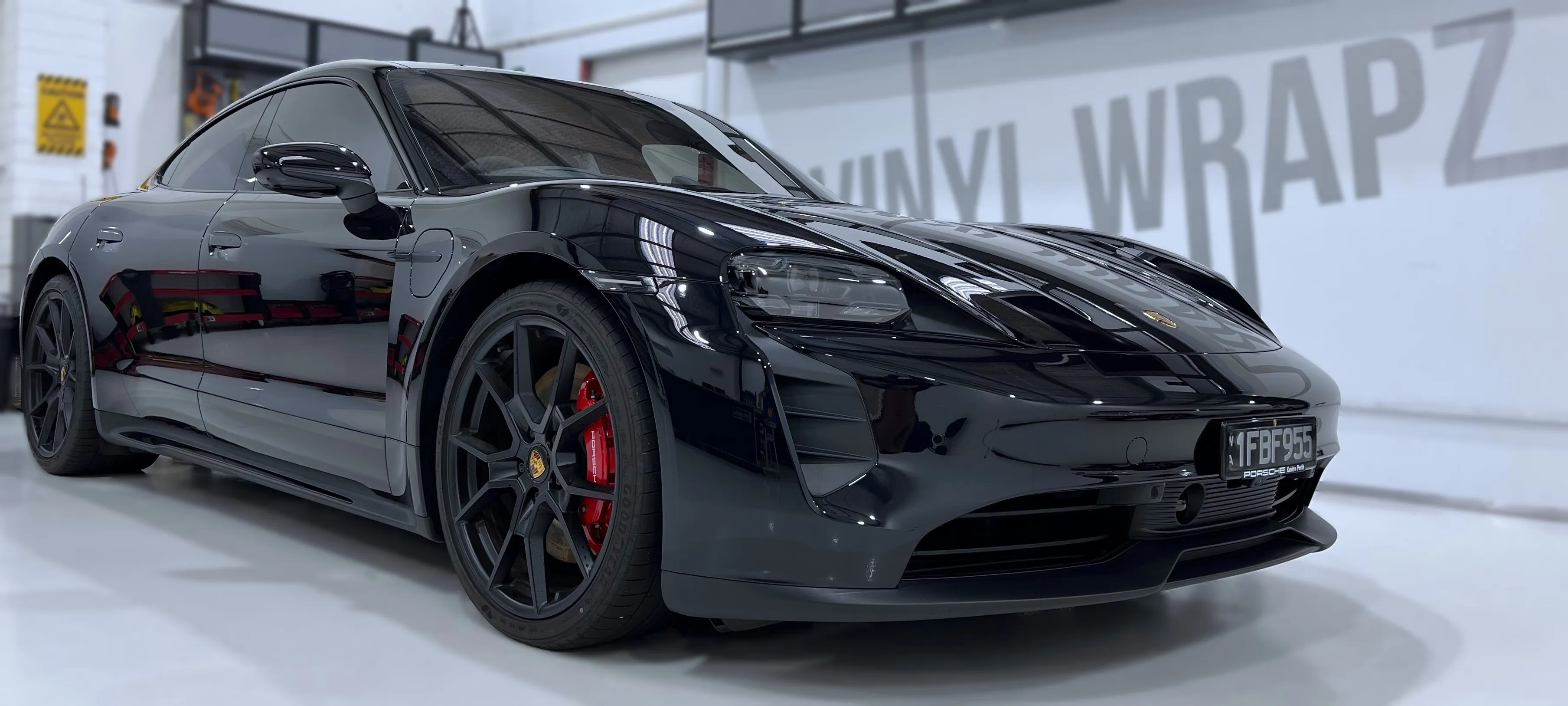
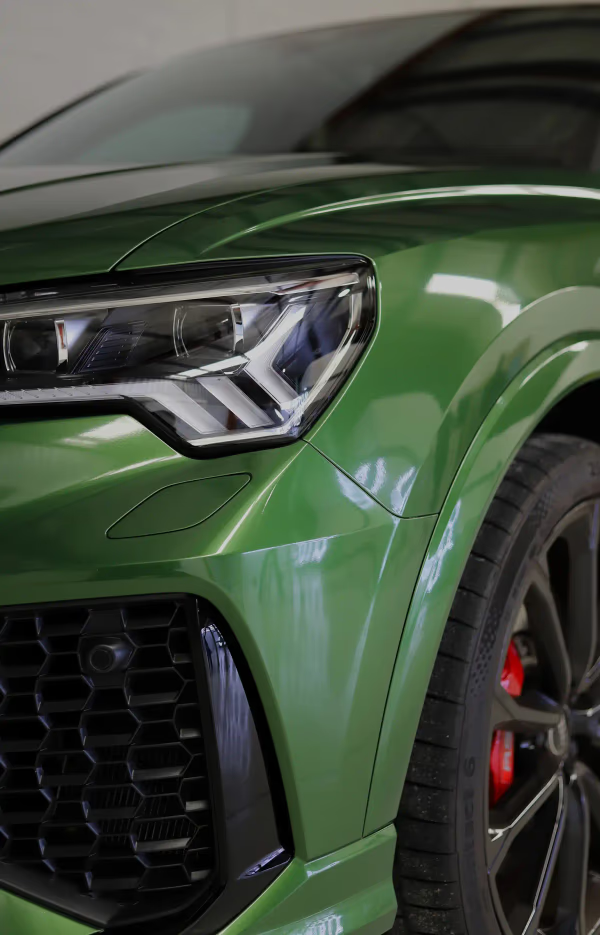
Porsche Taycan - paint protection film
Self-healing film across the panels that cop Perth's freeway gravel - cut to the car, edges wrapped, invisible at arm's length. The kind of job where the prep hours are the difference between protection and regret.
For a job like this
$3,000-$8,000
depending on how much of the car you cover.
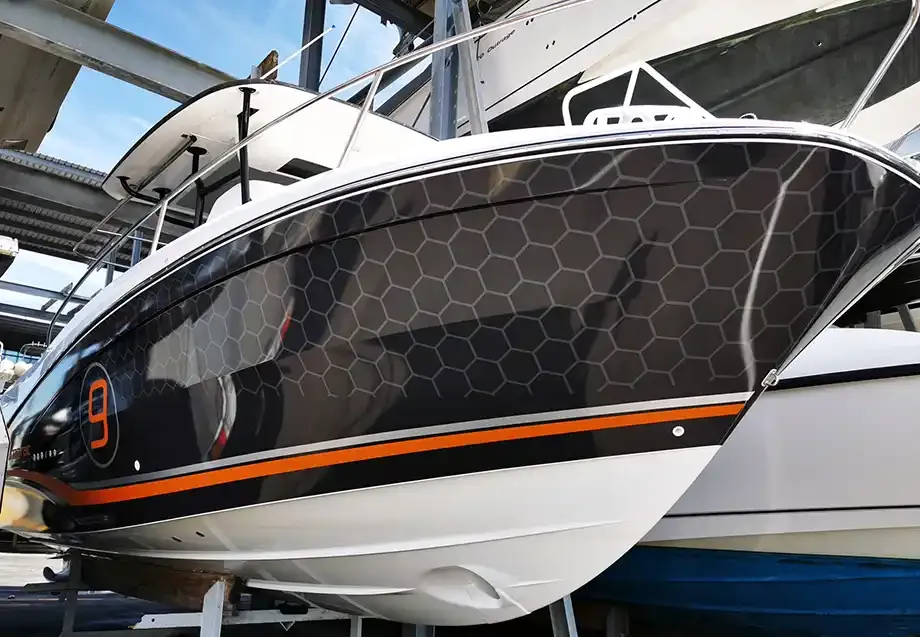
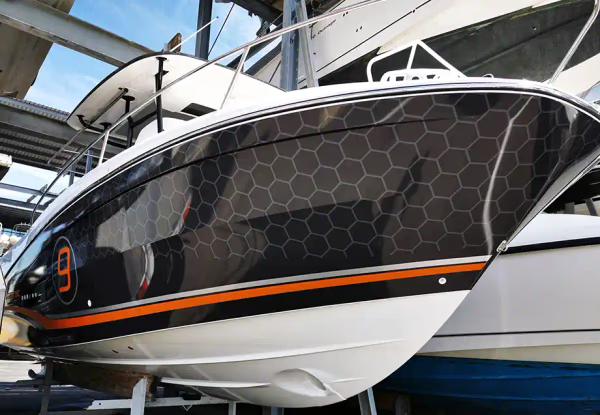
Jeanneau - hull wrap above the waterline
Marine film at boat scale: surface prep on gelcoat, long uninterrupted runs down the hull, and edge sealing where water and film meet. A fraction of the disruption of repainting - and reversible.
For a job like this
around $6,000
depending on hull length, condition and access.
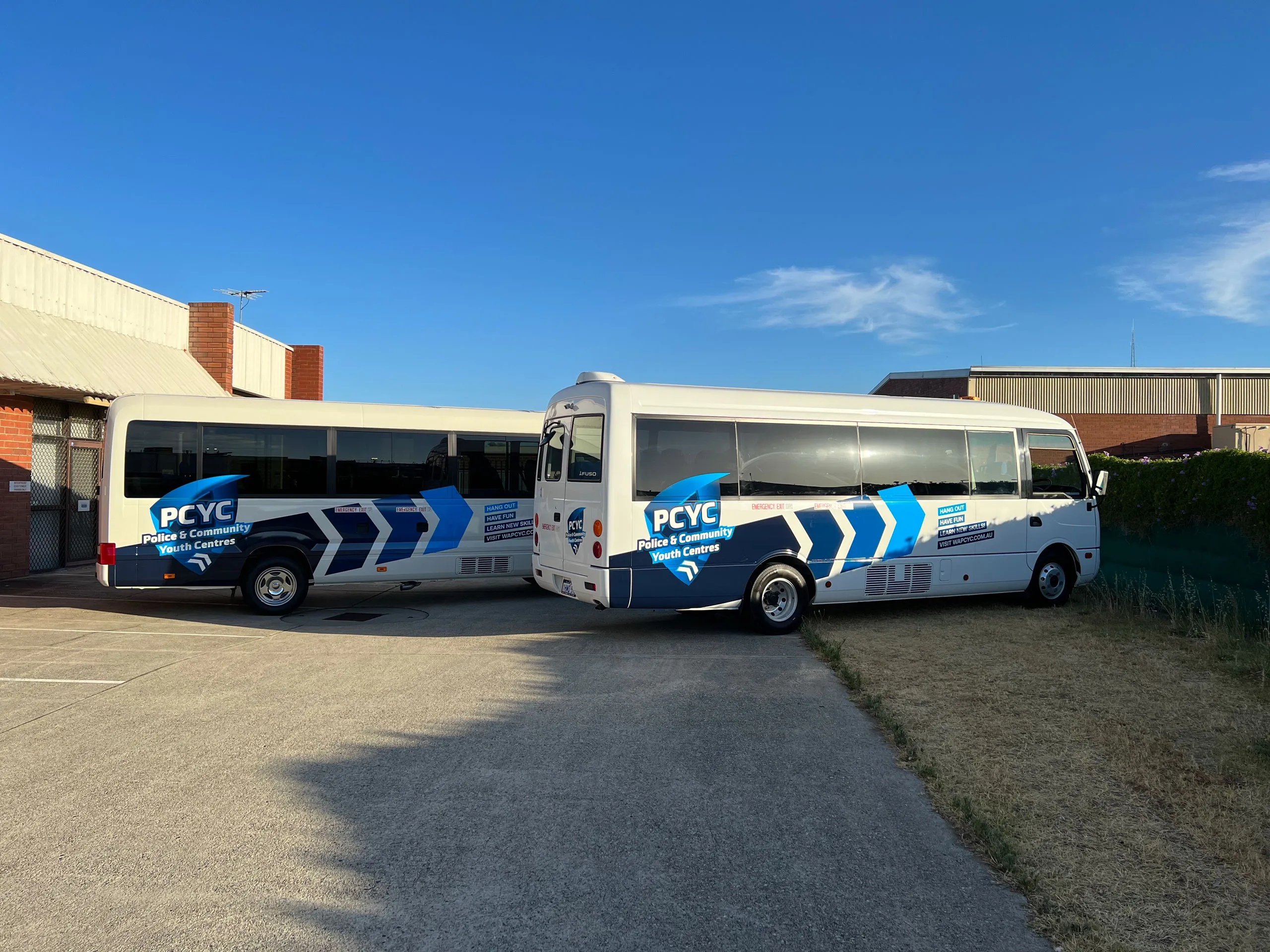
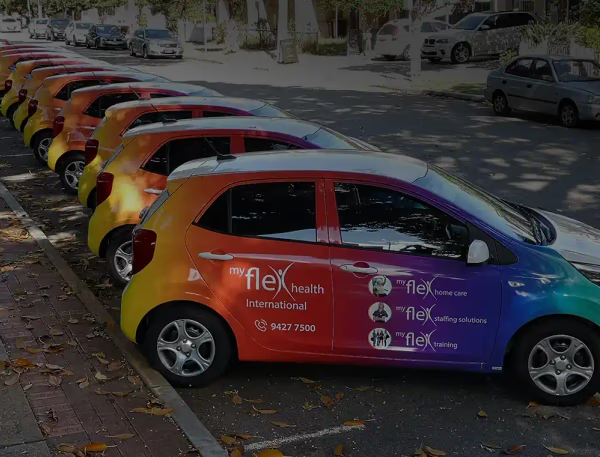
Bus fleet - full printed wrap
Fleet branding at bus scale: artwork built to template, printed and laminated in-house, then installed panel by panel. Fleet pricing works differently to one-off wraps - the design is built once, then rolled out identically across every vehicle.
For a job like this
$12,000+
depending on coverage and fleet size.
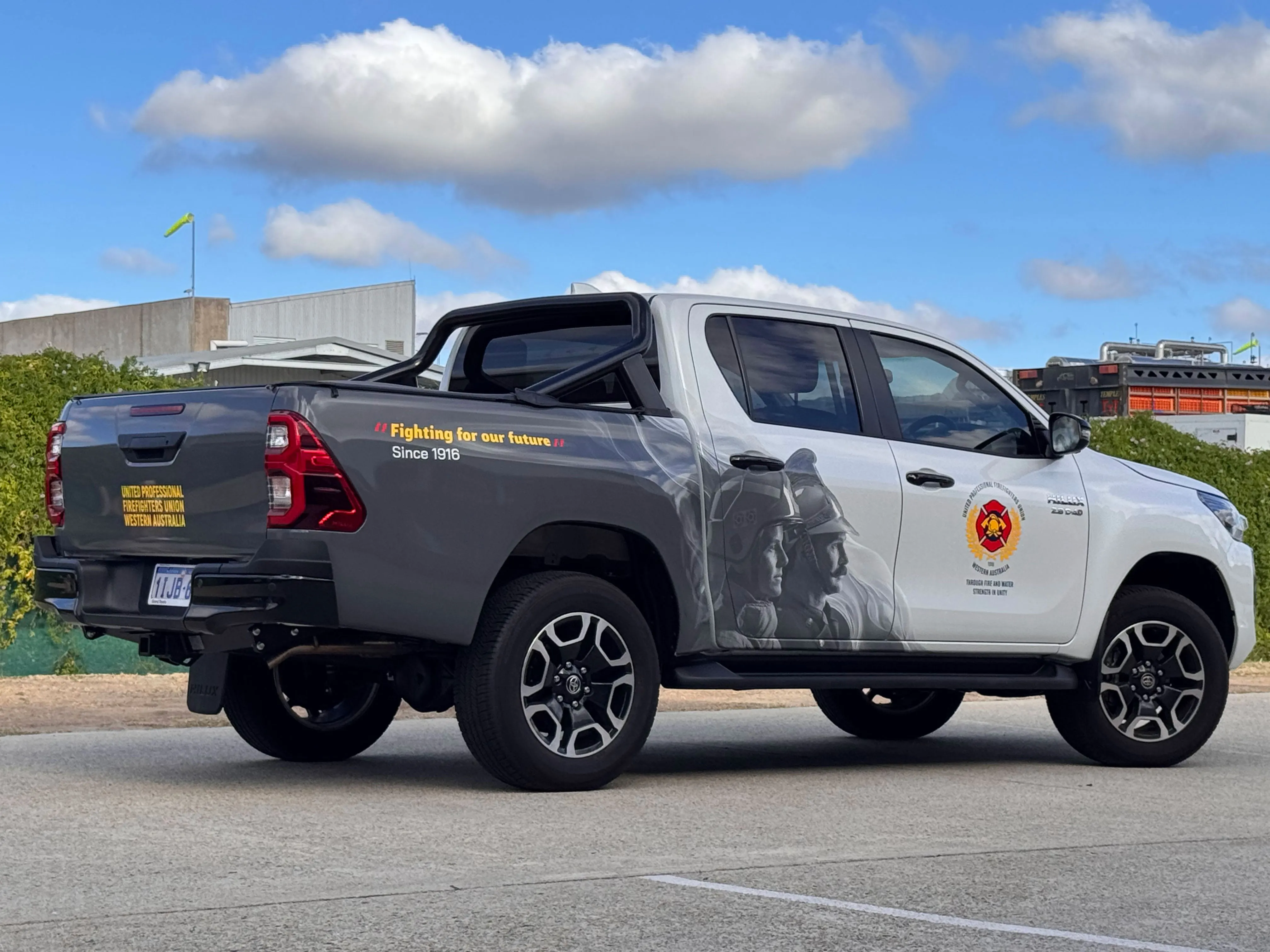
HiLux work ute - signage wrap
Design, print, lamination and install under one roof - partial coverage placed where it works hardest, on the panels people actually see. The difference between signage that costs money and signage that earns it.
For a job like this
$2,000-$4,500
depending on coverage and artwork.
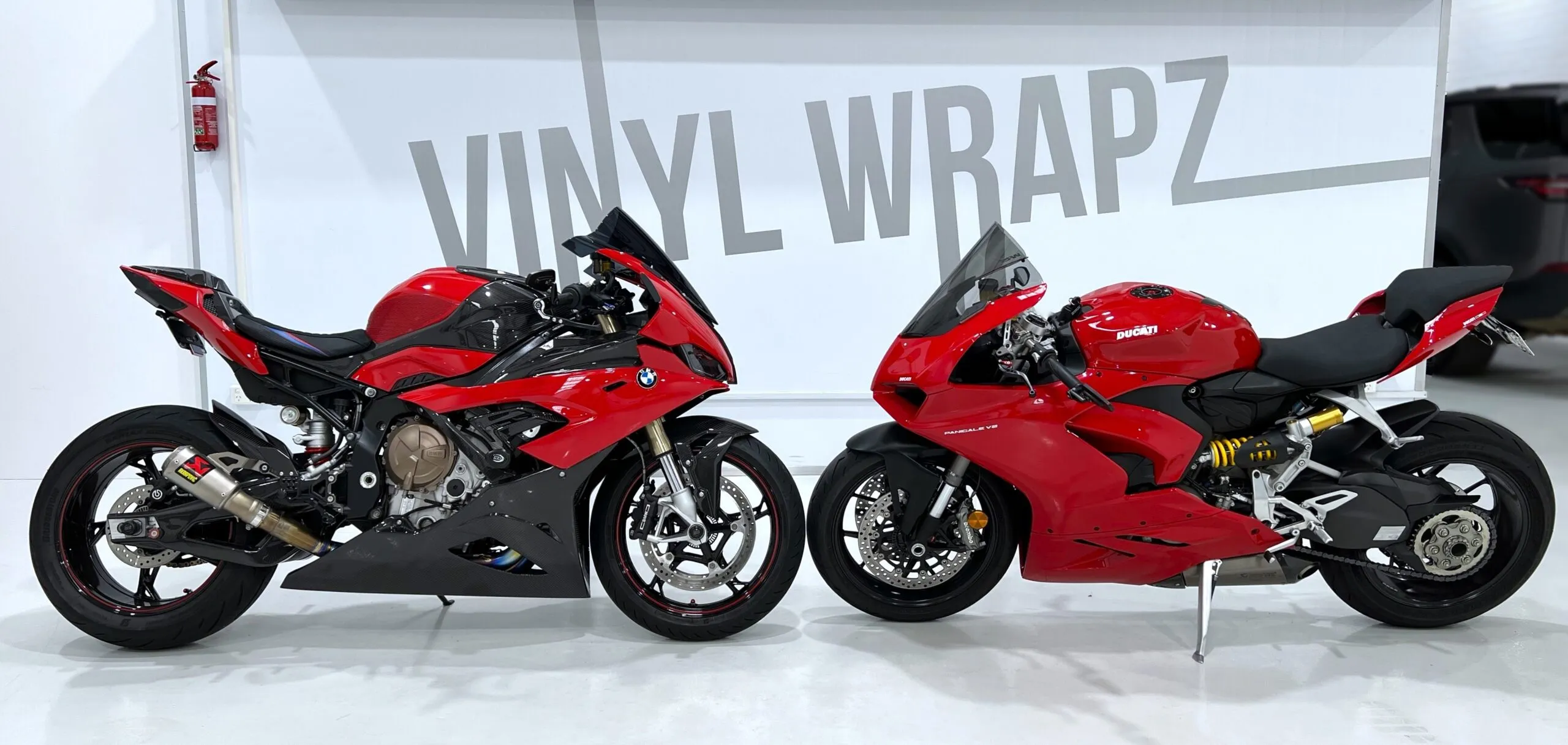
The honest one
Thinking about a motorcycle?
The honest answer: tanks and fairings are compound curves that vinyl fights, so a full colour wrap is rarely the smart spend on a bike. Paint protection film on tanks, fairings and headlights absolutely is - the Ducati and BMW above came through for exactly that. Our motorcycle guide walks through what's a go and what isn't, before you spend a dollar.
read the motorcycle guide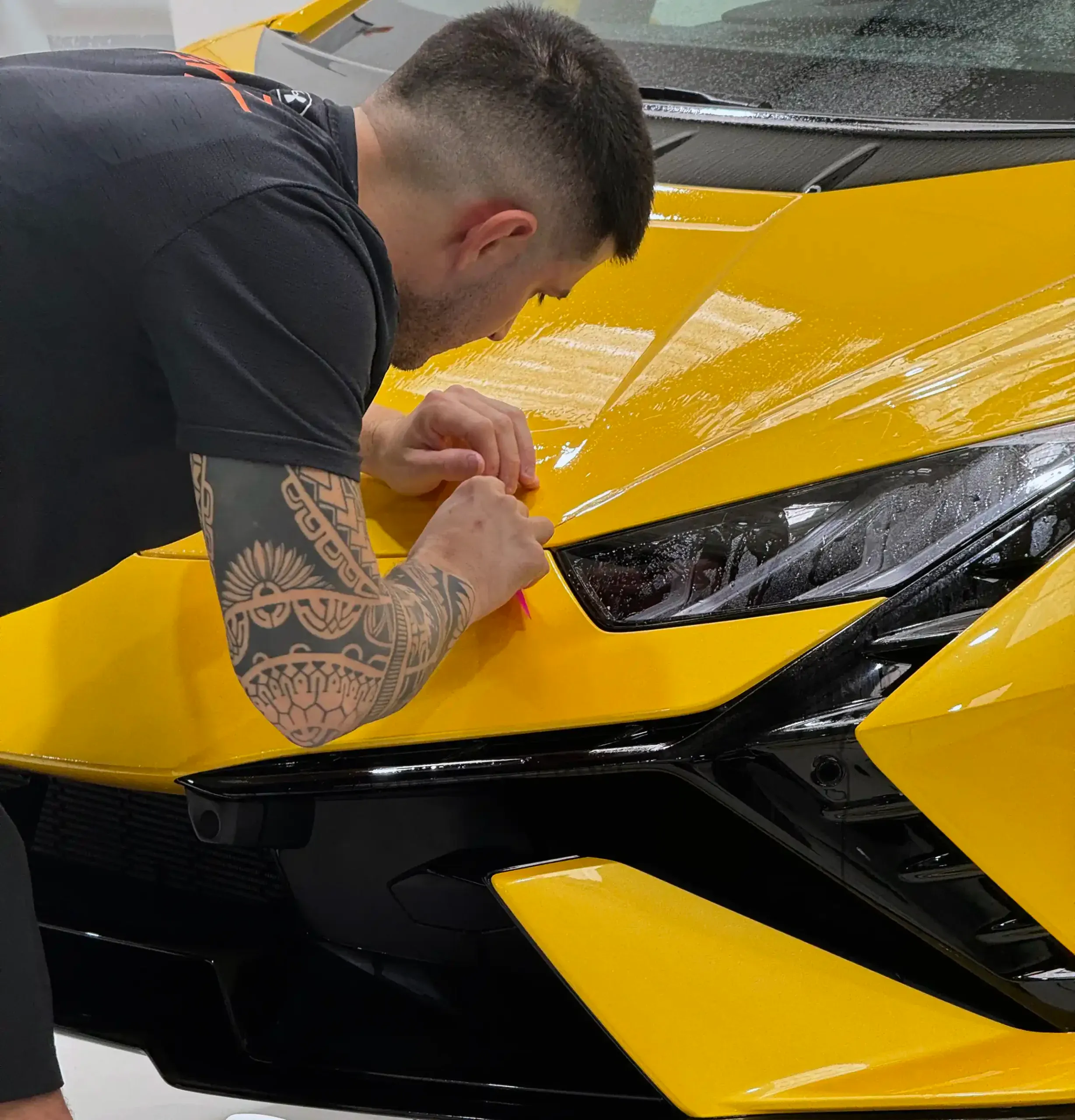
Go deeper
Vinyl wrap cost by service.
Pick a service to see how its pricing is actually built - and how to read the quotes you're given. Each one has its own dedicated cost guide.
01Colour change wraps
What sets the price
The biggest line in a colour-change quote is labour, and labour follows the vehicle. A small hatch with simple panels takes far fewer hours than a 4WD with flares, roof rails and deep bumper recesses.
The film sits on top of that. Gloss and satin sit at the accessible end of the range; colour-shift, chrome and textured films cost more per metre and demand more skill on the panel.
The last big swing is scope. A closed-door colour change covers the exterior painted panels you see with the doors shut - adding door jambs means disassembly, edge finishing and significantly more hours.
What to check on a quote
- The film brand and series are named in writing.
- Door jambs are clearly in or out.
- How trim is handled - removed and refitted, or wrapped around.
- Prep beyond a standard clean is allowed for. The vaguest quote is usually the one hiding the difference.
02Paint protection film
What sets the price
PPF is priced by coverage and cut. A full front end - bumper, bonnet, guards and mirrors - is the classic package because those panels take the most road damage per kilometre. Front plus sides extends into the doors and sills; a full vehicle covers every painted panel.
The film itself is a thick, self-healing urethane that costs a multiple of colour-change vinyl per metre - and the install is slower: patterns cut to your exact model, edges wrapped where possible, the finish judged at arm's length in direct light.
What to check on a quote
- The pattern is computer-cut for your model, not trimmed freehand on the car.
- Panel edges are wrapped, not cut short.
- The film warranty names yellowing, cracking and delamination in writing.
- Cheap PPF saves money on exactly the things you can't see on day one.
03Vehicle signage & branding
What sets the price
A signage wrap carries a cost layer passenger wraps don't: design, print and lamination. A simple logo-and-contact layout is a different job from a full printed wrap with brand matching and production artwork.
From there the price follows coverage - spot decals, part wrap or full wrap - and the vehicle itself. A ute, a van and a truck are three different install jobs, and one-way vision film on the glass adds material and time.
What to check on a quote
- You're comparing the same coverage - a partial-wrap quote against a full-wrap quote isn't a comparison.
- Design and artwork setup are included, or clearly billed separately.
- The print is laminated - unlaminated print fades fast in WA sun.
- How long the vehicle is off the road, and whether the install can work around your week.
04Fleet wraps
What sets the price
Fleet work is its own discipline. The artwork and templates are built once, approved once, then rolled out identically across every vehicle - which changes how the job is priced compared with quoting one van.
The per-vehicle cost is shaped by how repeatable the install is: matching models wrap efficiently, mixed fleets need a template per body shape. Scheduling matters just as much - installs staged so the fleet never stops working.
What to check on a quote
- How colour and placement stay consistent across vehicles installed weeks apart.
- Whether the quote covers a template per body shape, or assumes one size fits all.
- How downtime is staged - per vehicle, per week, around your operations.
- What happens when a vehicle joins the fleet later.
05Boat wraps
What sets the price
Boats are quoted by the vessel, never by a category. Hull length and freeboard set the material area; gelcoat condition sets the preparation hours; access - trailer, hardstand or pen - sets how the job is staged.
Everything above the waterline can be wrapped, and the three boat services price differently because they're different materials: printed graphics, solid-colour hull film and marine-grade protection film each carry their own material cost and install rate.
What to check on a quote
- What surface preparation is included on the gelcoat.
- How fittings are handled - removed, or worked around.
- How edges are sealed - the detail that decides how long a boat wrap survives.
- Whether the price covers the vessel where it sits, or assumes transport.
06Window tinting
What sets the price
Tint pricing has less to do with how dark you go and more to do with what the film is made of. Dyed film is the entry point; ceramic film costs more and does the real heat-rejection work - the shade can be identical while the performance and price are not.
The vehicle sets the labour: how many windows, how curved the rear glass is, and whether old tint has to come off first. Removal is often more work than the new install.
What to check on a quote
- The quote states film and VLT per glass area - WA sets different legal limits per window, so a shade name isn't enough.
- Which film series is being installed, not just the brand.
- The warranty covers bubbling, purpling and peeling - the failure modes of cheap film.
01Colour change wraps +
What sets the price
The biggest line in a colour-change quote is labour, and labour follows the vehicle. A small hatch with simple panels takes far fewer hours than a 4WD with flares, roof rails and deep bumper recesses.
The film sits on top of that. Gloss and satin sit at the accessible end of the range; colour-shift, chrome and textured films cost more per metre and demand more skill on the panel.
The last big swing is scope. A closed-door colour change covers the exterior painted panels you see with the doors shut - adding door jambs means disassembly, edge finishing and significantly more hours.
What to check on a quote
- The film brand and series are named in writing.
- Door jambs are clearly in or out.
- How trim is handled - removed and refitted, or wrapped around.
- Prep beyond a standard clean is allowed for. The vaguest quote is usually the one hiding the difference.
02Paint protection film +
What sets the price
PPF is priced by coverage and cut. A full front end - bumper, bonnet, guards and mirrors - is the classic package because those panels take the most road damage per kilometre. Front plus sides extends into the doors and sills; a full vehicle covers every painted panel.
The film itself is a thick, self-healing urethane that costs a multiple of colour-change vinyl per metre - and the install is slower: patterns cut to your exact model, edges wrapped where possible, the finish judged at arm's length in direct light.
What to check on a quote
- The pattern is computer-cut for your model, not trimmed freehand on the car.
- Panel edges are wrapped, not cut short.
- The film warranty names yellowing, cracking and delamination in writing.
- Cheap PPF saves money on exactly the things you can't see on day one.
03Vehicle signage & branding +
What sets the price
A signage wrap carries a cost layer passenger wraps don't: design, print and lamination. A simple logo-and-contact layout is a different job from a full printed wrap with brand matching and production artwork.
From there the price follows coverage - spot decals, part wrap or full wrap - and the vehicle itself. A ute, a van and a truck are three different install jobs, and one-way vision film on the glass adds material and time.
What to check on a quote
- You're comparing the same coverage - a partial-wrap quote against a full-wrap quote isn't a comparison.
- Design and artwork setup are included, or clearly billed separately.
- The print is laminated - unlaminated print fades fast in WA sun.
- How long the vehicle is off the road, and whether the install can work around your week.
04Fleet wraps +
What sets the price
Fleet work is its own discipline. The artwork and templates are built once, approved once, then rolled out identically across every vehicle - which changes how the job is priced compared with quoting one van.
The per-vehicle cost is shaped by how repeatable the install is: matching models wrap efficiently, mixed fleets need a template per body shape. Scheduling matters just as much - installs staged so the fleet never stops working.
What to check on a quote
- How colour and placement stay consistent across vehicles installed weeks apart.
- Whether the quote covers a template per body shape, or assumes one size fits all.
- How downtime is staged - per vehicle, per week, around your operations.
- What happens when a vehicle joins the fleet later.
05Boat wraps +
What sets the price
Boats are quoted by the vessel, never by a category. Hull length and freeboard set the material area; gelcoat condition sets the preparation hours; access - trailer, hardstand or pen - sets how the job is staged.
Everything above the waterline can be wrapped, and the three boat services price differently because they're different materials: printed graphics, solid-colour hull film and marine-grade protection film each carry their own material cost and install rate.
What to check on a quote
- What surface preparation is included on the gelcoat.
- How fittings are handled - removed, or worked around.
- How edges are sealed - the detail that decides how long a boat wrap survives.
- Whether the price covers the vessel where it sits, or assumes transport.
06Window tinting +
What sets the price
Tint pricing has less to do with how dark you go and more to do with what the film is made of. Dyed film is the entry point; ceramic film costs more and does the real heat-rejection work - the shade can be identical while the performance and price are not.
The vehicle sets the labour: how many windows, how curved the rear glass is, and whether old tint has to come off first. Removal is often more work than the new install.
What to check on a quote
- The quote states film and VLT per glass area - WA sets different legal limits per window, so a shade name isn't enough.
- Which film series is being installed, not just the brand.
- The warranty covers bubbling, purpling and peeling - the failure modes of cheap film.
Why vinyl wrap prices vary.
No two wrap quotes are exactly the same. A small hatchback, a 4WD with flares, a commercial van and a boat hull all need different materials, preparation and time.
Vehicle size, model and complexity
Larger vehicles need more film and more time - and complex vehicles take longer to wrap properly. Bumpers with deep recesses, guards, spoilers, mirror caps, handles, flares, trays, canopies and body kits all affect labour, and some vehicles need more trim removal and refitting to achieve a clean finish.
Door jambs are another major factor. A closed-door colour change focuses on the exterior painted panels; wrapping the jambs and internal edges adds a significant amount of work, which is why it's quoted separately.
Vehicle condition and prep work
Vinyl needs a clean, smooth, suitable surface. Tar, glue residue, old vinyl, heavy contamination, oxidised paint, stone chips, rust, dents or poor previous paintwork all increase preparation time.
Sometimes we can clean and prepare the surface in-house; other times paint or panel repairs are needed before a quality wrap can go on. This is why photos help - but don't always replace an in-person inspection.
Film type and finish
Gloss, satin, matte, metallic, colour-shift, chrome, carbon fibre, printed films and specialty textures all sit in different cost ranges. Premium films usually cost more - and they also tend to look better, install better and age better when matched to the right application.
There's also a difference you can't see on a swatch: cast films are engineered to stretch into curves and recesses and hold there for years, while cheaper calendared films fight complex panels and shrink back over time. Two rolls in the identical colour can be a long way apart in price - and in lifespan.
Artwork and design
Commercial wraps carry a design factor: a simple logo-and-contact layout is a different job from a full printed wrap with brand matching, vehicle templates and production artwork. Supplied artwork often still needs checking, adjusting or rebuilding before it can be printed and installed properly.
The good news: a smart partial wrap can deliver strong business visibility without needing a full wrap.
Coverage level
The more coverage, the more material and labour: spot graphics and decals, cut lettering, partial wraps, full printed commercial wraps, closed-door colour changes, door jambs and extended coverage, and boat hull wraps all step up from one another.
What's already on the vehicle
Old wrap, old tint and old PPF all have to come off before anything new goes on - and removal time is hard to judge from the outside. Film a few years old can peel in clean sheets; baked-on film a decade old can come off in flakes and leave a panel of adhesive behind.
That's why removal is quoted separately, and why "just wrap over the top" is rarely the answer - film needs paint to bond to, not old film.
Turnaround and downtime
Time in the bay is part of the price. A job that has to happen this week competes with booked work; a job that can wait for the right slot doesn't. Commercial vehicles add a second clock - every day a work ute is in the shop is a day it isn't earning.
Good quoting plans for this: installs staged around your schedule, realistic timing up front, and no surprise extra days.
Warranty and film backing
Films carry manufacturer warranties, and longer-rated films cost more per metre - part of what you're paying for is the years the film is engineered to survive in the sun.
Perth is a hard climate for vinyl: high UV, hot panels, salt air near the coast. Film that's rated for it, installed so the warranty actually holds, is a different product from the cheapest roll in the right colour.
What's included - and what isn't.
A clear quote prevents confusion and makes it easier to compare one wrap quote with another.
Usually included
in a colour change quote
- Premium wrap film in your selected colour or finish
- Standard exterior preparation
- Installation to exterior painted panels
- Suitable trim removal and refit where required
- Professional installation by the Vinyl Wrapz team
- Handover and aftercare guidance
Not included
unless it's on your written quote
- Door jambs
- Inside doors
- Custom body kits
- Damaged paint repair
- Rust repair
- Old wrap removal
- Glue removal
- Ceramic coating
- Rush turnaround
Commercial, fleet, boat and specialty projects may include different items. Your written quote clearly confirms the scope, exclusions and GST.
Why cheap wrap quotes can cost more later.
A cheaper wrap quote isn't always a better deal - sometimes it simply means something important has been left out. Poor preparation leads to lifting. Overstretched film can crack. Bad panel planning leaves visible joins in the wrong places. Low-quality films fade faster and fail sooner, and weak paint or poor previous repairs can create problems during removal.
We know wrap inside out, and the goal is never to make the job as cheap as possible - it's to quote it properly so the vehicle looks sharp, the film performs and you know exactly what's included.
Already collected quotes? We'll help you read them.
Send us the quotes you've gathered - from anyone, including our competitors - and we'll walk you through what's included, what's missing and where they genuinely differ. What's good, what's not, no hard sell. If someone else's quote is the right call for your job, we'll tell you that too.
Send your quotes across and we'll compare them for youHow to get an accurate wrap quote.
Photos don't replace a final inspection, but they help us give you a much more useful first estimate.
Send us:
- Vehicle make, model and year
- Photos of the front, rear, both sides and roof if possible
- Any modifications, flares, body kits, accessories or damage
- Whether you want colour change, commercial signage, boat wrap or PPF
- Preferred colour, finish or brand
- Whether you want door jambs included
- Target install date
FAQ
What Perth customers ask about vinyl wrap cost.
How much does a full car wrap cost in Perth? +
It depends on the vehicle, film and coverage - the guide table above shows how the pricing is structured, and the fastest way to a real number is sending photos and details through the quote page. Every written quote itemises exactly what's included.
What is a closed-door colour change wrap? +
It covers the exterior painted panels that are visible when the doors are closed - bonnet, roof, doors, guards, bumpers, boot. Door jambs, inside door edges and internal painted areas are not included unless specifically quoted. It's the industry-standard scope because it delivers the complete visual transformation at the sensible price point: with the doors shut, the car reads as fully recoloured. The jambs add-on exists for owners who want the story to hold with every door open - worthwhile on show cars, optional on dailies.
How much extra are door jambs? +
Door jambs are quoted as their own line because they add a disproportionate amount of labour for their area - controlled disassembly, fiddly finishing around seals and internal edges, and detail work that can't be rushed without it showing every time a door opens. The from-price on this page is the honest starting point. Whether they're worth it depends on the car: on a colour change far from the original paint, open doors reveal the old colour; on a near-match, most owners happily skip them.
Is a car wrap cheaper than paint? +
Against a quality respray, usually yes - and it's faster and reversible on top. But the honest answer depends on what you're comparing: a budget respray can undercut a premium wrap on price while permanently altering the car and often cutting corners on prep. They're different products, not two prices for the same thing: paint is permanent and repairs damage; a wrap transforms a healthy car while preserving the factory finish underneath. Our wrap-vs-respray guide walks the whole decision through properly.
Does a wrap protect paint? +
Incidentally, yes - a wrap is a physical layer, so it shields the paint from UV and light surface wear, and cars often emerge from under old wraps with beautifully preserved paint. But it isn't paint protection film and isn't engineered for impact: a stone that PPF would absorb can cut vinyl and chip the paint beneath. Treat wrap protection as a genuine bonus, not the plan - and if stone chips are the actual concern, that's PPF's job, sometimes over the wrap's own front panels.
Will a wrap damage my paint when it's removed? +
On suitable original paint in good condition, professional removal is usually straightforward - quality film is designed to come off cleanly with heat and patience, and what's revealed is paint that's been shielded for years. The honest risk cases: weak or thin paint, poor respray work, rust or pre-existing damage, where any film's adhesive can lift what was already failing. That's exactly why we check your panels and have that conversation before quoting, not at removal time - no surprises in either direction.
How long does a wrap last in Perth? +
Quality wraps professionally applied are commonly enjoyed for years - and how the vehicle lives moves the answer more than any brochure number. Perth's UV is the main ager: garaged and hand-washed sits at the long end; street-parked, brush-washed and never rinsed sits at the short end, by a wide margin. The film tier matters too, which is why we name it on your quote. Our care guide covers the exact routine - washing, parking, dropping-off-the-bird-droppings-today - that buys the long end of the range.
What affects commercial vehicle wrap pricing? +
Eight levers, roughly in order: design time (working artwork versus starting from a logo), print coverage (partial versus full), vehicle type and panel count, one-way vision film on glass, the quality of artwork supplied (print-ready files save real money), installation complexity, and whether it's one vehicle or a fleet - fleet rollouts price differently because the design and templating work happens once. Send your logo and vehicle details and the first estimate is usually same business day.
How much does a partial van or ute wrap cost? +
The from-price on this page is the honest starting point, and the final number follows the amount of print, the coverage area, design complexity and the vehicle type. Worth knowing before you assume you need more: a well-designed partial wrap - strong panels, smart placement, readable at traffic distance - often delivers most of a full wrap's visibility for a fraction of the cost. We'll tell you straight when a partial does the job and when the full wrap genuinely earns its premium.
Can you quote from photos? +
Yes - clear photos of all sides give us a much better first estimate than any phone description, and for straightforward jobs that estimate lands the same business day. A final quote may still need an in-person look, especially where there's old wrap to remove, existing damage, unusual paint condition or modifications - the things photos flatten out. The workflow that works: photos first for the ballpark, then a quick inspection at Osborne Park to lock the itemised number in writing.
Is GST included in the prices? +
Your written quote states the GST treatment explicitly, so you always know the true total before committing - no asterisks discovered at invoice time. Guide figures on this page are for budgeting; the quote is the document that binds, and it's itemised so you can see exactly what each line covers. For business buyers, the itemised format also makes life easy at BAS time - another small reason commercial operators keep coming back.
Do you remove old wraps? +
Yes, where suitable - and removal is quoted as its own line because the honest cost varies enormously. Fresh quality film comes off in hours; a decade-old bargain wrap that's baked through ten Perth summers can take days of heat, patience and adhesive clean-up. The from-price on this page covers removal and prep at the friendly end; the film's age, the adhesive's condition and the paint underneath decide where your job actually lands. We assess before we quote, so the number doesn't move afterwards.
Do you wrap boats? +
Yes - above the waterline, which is the honest scope for any marine film (below the waterline belongs to antifoul, and we'll always say so). Boat wraps are quoted per vessel because hull length, freeboard height, access, surface condition and edge finishing around fittings all move the hours involved. Printed graphics, hull colour changes and clear protection film are all on the menu - the boat wraps page carries the detail and its own from-prices.
Can I get a same-day estimate? +
In many cases, yes - send the vehicle details and photos and an initial estimate usually comes back the same business day. More complex projects (fleet rollouts, removals, unusual vehicles, paint-condition questions) may need an in-person look at the Osborne Park workshop before we'll commit numbers, because we'd rather inspect first than revise a quote later. Either way you end up with the same thing: an itemised, written quote that doesn't move.
Visit us
Visit the Vinyl Wrapz workshop in Osborne Park.
- Vinyl Wrapz18 Rowallan Street, Osborne Park WA 6017
- (08) 9443 8808
- Mon-Fri, 8am-4pm
- Call when you arrive and we'll guide you in.
Interactive map loading shortly