
The honest comparison
DIY vs professional wrap: the honest maths.
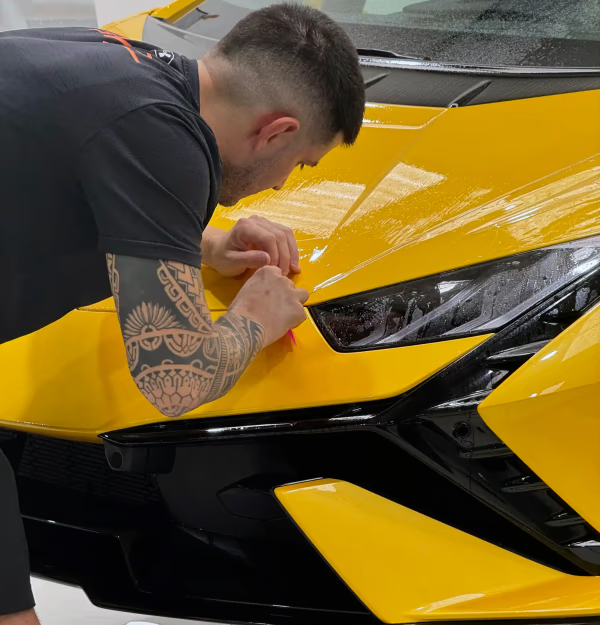
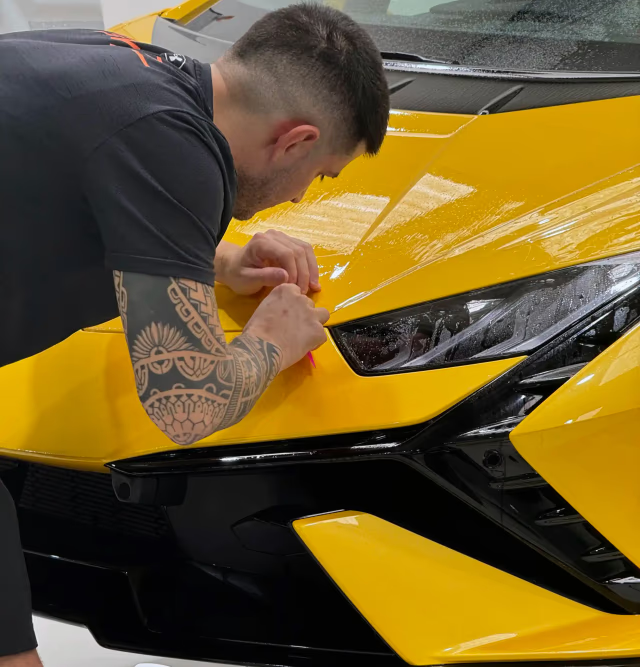
DIY wrapping is real - the films are buyable, the tutorials are endless, and on small flat pieces it's a satisfying weekend. On a whole car it's usually the expensive option wearing a cheap disguise: professional film with no installer discount, a learning curve paid for in ruined material, and a finish that photographs fine and inspects badly. If you're curious and patient, start with a bonnet or mirrors. If you want the car to look professionally wrapped, the maths favours the professionals more than the price tags suggest.
| Side by side | DIY wrap | Professional wrap |
|---|---|---|
| Film cost | Retail prices - often above what shops pay | Trade pricing on premium cast film, built into the quote |
| Wasted material | The hidden line item - misjudged panels are binned film | Waste priced in and minimised by pattern experience |
| Compound curves | Where DIY jobs go to die - bumpers, mirrors, recesses | Daily bread - heat, tension and patience in trained hands |
| Finish quality | Good from three metres; edges and recesses tell the truth | Inspection-grade edges, tucked and sealed |
| Time | Weekends, plural | Days, scheduled |
| When it fails | You own the failure and the re-purchase | Workmanship warranty - the shop owns its edges |
DIY makes sense when…
- It's a small, flat, low-stakes piece - mirrors, trim, a bonnet
- The project itself is the fun - you're buying a hobby
- You accept the material waste as tuition
Go professional when…
- It's a full wrap, or anything with bumpers and recesses
- The car's daily presentation matters - yours or your brand's
- You want a warranty standing behind the edges
Why the skill gap shows at the edges
Laying film on a flat door is genuinely learnable in an afternoon. What separates a weekend wrap from a professional one lives in the last ten percent: compound curves where the film must be heated and convinced rather than stretched, edges that get tucked and sealed rather than trimmed and hoped for, recesses where tension has to be fed in from the right direction or the film lifts by spring. Every one of those skills is invisible in a tutorial and obvious on a car - usually about three months later.
There's also a materials trap: quality cast film sold retail often costs a private buyer more per metre than shops pay, so the DIY saving is thinner than it looks before the first ruined panel - and near zero after it.
FAQ
DIY vs Professional - asked straight.
How much do you save wrapping a car yourself? +
On paper, the labour - often half the professional price. In practice, subtract retail film pricing, the panels you'll redo, the tools, and the weekends, then look at what's left next to the finish difference. For small pieces the saving is real. For full cars, most people who've done both describe DIY as the more expensive way to get the worse result.
Is DIY wrap film different from professional film? +
The good stuff is the same cast film shops use - if you buy the good stuff, at retail. The trap is the marketplace tier: cheap calendared 'wrap film' that fights curves and shrinks by summer, which is how many DIY projects fail regardless of technique. If you do go DIY, buy the film a professional would use and accept the price of it.
Can a shop fix a failed DIY wrap? +
Yes - it's a job we see. The honest news: it usually costs more than wrapping the car fresh would have, because removal of a stretched, patched or baked-on DIY job is slow work, and any adhesive damage or lifted paint has to be dealt with before new film goes on. Factor that risk into the DIY maths before you start, not after.
I just want to try wrapping - where should I start? +
Mirrors, interior trim, a motorbike tank, a bonnet - small, removable or flat things where a redo costs a coffee, not a car. It's a genuinely rewarding skill and we're not precious about people learning it. When the project grows past your patience or your panel, you know where the professionals are.
Project outgrew the garage?
No judgement - bring it in, we'll quote the wrap (or the rescue) straight.